
If you love dishes that bring warmth and bold flavor with minimal fuss, this Kimchi Jjigae (Kimchi Stew) Recipe is going to be your new go-to. It's the kind of stew you make when you crave comfort, especially on chilly evenings or when you want an easy meal that tastes deeply satisfying. This Korean classic blends spicy, tangy kimchi with tender pork and silky tofu, creating a pot of stew that's both vibrant and soothing.

Jump to:
Why You'll Make This on Repeat
There's something magical about how kimchi evolves when slowly simmered with pork and broth. This stew not only comforts but energizes with its vibrant tang and spicy warmth. You'll come back to it because it's so straightforward yet rewarding every single time.
- Reliable Texture: The pork belly keeps every bite tender and juicy, while the tofu melts gently into the broth.
- Balanced, Cozy Flavor: A perfect umami blend from anchovy broth, fermented kimchi, and Korean chili pastes creates a hearty stew.
- Pantry-Friendly: Most ingredients are easy to find, and it's a smart use of leftover kimchi and staples.
- Weeknight Simple: Takes just 30 minutes, making it accessible even on busy days.
Ingredient Highlights

For the best Kimchi Jjigae (Kimchi Stew) Recipe, I always focus on quality kimchi and fresh aromatics. The balance between sourness, spice, and savory pork depends a lot on your ingredients - so choose thoughtfully.
- Kimchi: Use well-fermented kimchi with plenty of juice for richer flavor and deep tang.
- Pork Belly: Thin slices render down nicely, infusing the stew with a tender, fatty texture.
- Anchovy Broth: Traditional and prized for umami depth; you can substitute with chicken stock if needed.
- Gochugaru & Gochujang: These Korean chili flakes and paste bring authentic spice and smokiness - don't swap them out!
Quick Note: Exact measurements are in the printable recipe card at the bottom.
Step-by-Step for Kimchi Jjigae (Kimchi Stew) Recipe
Step 1 - Prep & Season
Start by heating a tablespoon of oil in a small pot over medium-high heat. Add the thinly sliced yellow onion and minced garlic first, and sauté just until they're fragrant and glossy, about one minute. This step wakes up the aromatics, so don't rush it! Next, add your thinly sliced pork belly, chopped kimchi, and shiitake mushrooms. Cook, stirring occasionally until the pork is fully cooked through and the kimchi softens slightly-around five minutes. You'll notice the stew beginning to take on a rich and toasty depth here.
Step 2 - Build Flavor
Once the pork and vegetables are nicely cooked, pour in the anchovy broth, kimchi brine, brown sugar, gochugaru, gochujang, and soup soy sauce. Stir everything well to combine. Bring the stew to a rolling boil, then immediately reduce to a gentle simmer and cover. Let it cook on low heat for 10 to 12 minutes. This simmer is crucial-it lets the flavors marry beautifully while the broth thickens just enough. You'll find the spicy aroma deepening and the colors becoming more vibrant.
Step 3 - Finish for Best Texture
Finally, add the sesame oil and carefully add the firm tofu slices. Simmer uncovered for another 5 to 7 minutes so the tofu warms through but doesn't fall apart. Taste the stew and adjust salt to your preference. This last step softens the tofu to silky perfection and gives the whole dish a subtle nutty finish. Resist the urge to overcook the tofu-it should be tender but still hold its shape beautifully.
Kitchen Notes I Rely On
I find that using the proper broth and a good balance of kimchi brine makes a big difference for authentic depth. Also, always slice the pork and vegetables uniformly-that helps the stew cook evenly and look inviting at the table.
- Doneness Cue: Pork should be fully opaque and tender, and kimchi should be softened but not mushy.
- Temperature Trick: Simmer gently rather than boiling hard to avoid toughening the tofu or evaporating too much broth.
- Make-Ahead Move: Stew flavors deepen overnight, so it's great even reheated.
- Skip This Pitfall: Don't add tofu too early-adding it last keeps it from breaking apart.
Serving & Sides

Finishing Touches
I like ending the Kimchi Jjigae (Kimchi Stew) Recipe with a sprinkle of minced green onions. The fresh, oniony brightness cuts through the rich broth, adding a crisp freshness and a pop of color. A dash of toasted sesame seeds can also bring a nice crunch and extra nuttiness you'll appreciate here.
Pairs Nicely With
Steamed white rice is an obvious and perfect match - its neutral flavor balances out the stew's boldness beautifully. You might also enjoy simple Korean side dishes like sautéed spinach or pickled radishes, which provide refreshing contrast in texture and taste.
Simple Plating Upgrades
For casual meals, serving Kimchi Jjigae in a rustic earthenware bowl adds an authentic touch and helps retain heat. For special occasions, garnish with fresh chili slices or a small drizzle of toasted sesame oil on top for that glossy finish that makes the dish look irresistible.
Make-Ahead & Storage
Storing Leftovers
Store the stew in an airtight container in the fridge for up to 3 days. Because the flavors deepen with time, leftovers often taste even better the next day. Just be mindful that the tofu will continue absorbing broth, so the texture will be softer but still comforting.
Freezer Tips
Kimchi Jjigae freezes well in sealed freezer-safe containers or heavy-duty bags for up to 2 months. Thaw it gently in the fridge overnight. Once reheated, it may separate slightly but a quick stir will bring it back together - the flavor stays robust, making it ideal to have on hand for busy days.
Reheating Kimchi Jjigae (Kimchi Stew) Recipe Without Drying Out
To reheat, I recommend using the stovetop over medium-low heat with a splash of water or broth to keep it moist. If microwaving, cover loosely and heat in short bursts, stirring in between. Avoid high heat to prevent drying out the tofu and toughening the pork. This way, your Kimchi Jjigae stays glossy, warm, and comforting just like freshly made.
Frequently Asked Questions
Absolutely! To keep the stew vegetarian, substitute anchovy broth with vegetable broth and omit the pork. Tofu and mushrooms add hearty texture, making a rich, flavorful stew that's purely plant-based.
It has a moderate level of heat from gochugaru and gochujang, balanced by the natural sourness of kimchi. You can adjust the chili flakes to taste-start mild and add more if you like a spicier kick.
I prefer using well-aged, sour kimchi with plenty of juice as it imparts richer flavor and depth. Fresh kimchi will work but may yield a less intense broth.
Yes, thinly sliced beef or chicken can be used, but pork belly offers the best fat content for a silky, rich broth. If using leaner meats, you might want to add a bit more oil for richness.
Final Thoughts
Making Kimchi Jjigae (Kimchi Stew) Recipe feels like sharing a piece of Korean home-cooking with friends and family. I love how approachable it is, yet it delivers such deep, layered flavors. It's a dish I turn to often when I want food that's genuinely comforting without complicated prep. Give it a try, and you'll soon find it's one of those meals you'll want to revisit time and again-warm, spicy, and utterly satisfying.
PrintPrintable Recipe
Kimchi Jjigae (Kimchi Stew) Recipe
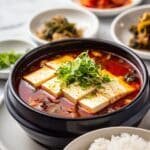
Kimchi Jjigae, or Kimchi Stew, is a hearty and flavorful Korean dish featuring fermented kimchi, tender pork belly, tofu, and a savory spicy broth. This comforting stew is perfect for warming up and enjoying with steamed rice.
- Prep Time: 10 minutes
- Cook Time: 20 minutes
- Total Time: 30 minutes
- Yield: 4 servings
- Category: Main Course
- Method: Stovetop
- Cuisine: Korean
Ingredients
Main Ingredients
- ½ small yellow onion, thinly sliced
- 3 garlic cloves, minced
- 4 oz pork belly, thinly sliced
- 2 shiitake mushrooms, stems removed, thinly sliced
- 1 cup kimchi, chopped
- ½ container (8 oz) firm tofu, sliced
- 2 green onions, minced for garnish
Jjigae Soup Base
- 2 ½ cups anchovy broth or chicken stock (more to taste)
- ¼ cup kimchi brine
- 2 teaspoons brown sugar
- 1 tablespoon Gochugaru Korean red chili flakes
- 1 teaspoon gochujang Korean hot pepper paste
- 1 tablespoon soup soy sauce
- Salt to taste
- 1 teaspoon sesame oil
Instructions
- Cook aromatics and pork: Heat 1 tablespoon of oil over medium-high heat in a small pot. Add yellow onion and minced garlic and sauté until fragrant, about 1 minute. Add pork belly, kimchi, and shiitake mushrooms, and cook until the pork is cooked through, about 5 minutes.
- Add soup base and simmer: Pour in anchovy broth, kimchi brine, brown sugar, gochugaru, gochujang, and soy sauce. Bring the stew to a boil. Once boiling, cover the pot and reduce heat to low or medium-low for a gentle simmer. Let it simmer for 12 minutes to allow the flavors to meld.
- Finish the stew and serve: Add sesame oil, tofu slices, and green onions into the pot. Continue simmering gently for another 7 minutes until tofu is heated through. Season with salt to taste. Garnish with additional green onions and serve immediately, ideally with steamed rice.
Notes
- Use anchovy broth for traditional flavor; chicken stock is a good substitute if unavailable.
- If you prefer less spicy stew, reduce the amount of gochugaru and gochujang.
- Firm tofu holds up best in the stew without breaking apart.
- Adjust the salt at the end since soy sauce and kimchi brine can be salty.
- Serve with steamed white rice for a complete meal.





Leave a Reply