
The Herb Crusted Prime Rib Roast Recipe is a show-stopping centerpiece perfect for special occasions or whenever you want an impressively flavorful roast. This recipe delivers a beautifully crusted exterior bursting with fresh herbs and garlic, which complements the juicy, tender prime rib inside. Whether it's a holiday feast or a weekend gathering, you'll love how this elegant yet approachable roast fills your kitchen with mouthwatering aromas and invites lingering conversations.

Jump to:
Why You'll Make This on Repeat
I've found this herb crusted prime rib roast hits all the right notes: reliably tender inside with a savory crust that carries fresh herbal brightness. It's the kind of dish that feels special without being fussy, making it a versatile pick for holidays or weekend dinners when you want something memorable.
- Reliable Texture: The low-and-slow finish after that high-temp sear ensures juicy, evenly cooked beef with a perfect medium-rare center.
- Balanced, Cozy Flavor: Fresh rosemary, thyme, and garlic mingle into a fragrant crust, offering tons of flavor without overpowering the prime rib's richness.
- Pantry-Friendly: The herb rub uses simple ingredients you likely have on hand, no need for exotic spices.
- Weeknight Simple: While impressive, the recipe's steps are straightforward, letting your oven do the heavy lifting once you've seasoned and seared.
Ingredient Highlights

Choosing quality ingredients for this Herb Crusted Prime Rib Roast Recipe is key. I always look for a well-marbled, bone-in prime rib for that unbeatable tenderness and flavor. Fresh herbs and real butter make all the difference when building that gorgeous crust.
- Prime rib (bone-in standing rib roast): Pick a 7-8 pound cut with good marbling; the bones add richness and help the roast cook evenly.
- Fresh rosemary and thyme: Fresh is best here to give the crust that vibrant herb aroma and deep flavor.
- Garlic cloves: Use fresh peeled cloves and mash them into a paste to ensure the garlic flavor infuses thoroughly.
- Unsalted butter: Softened butter combines beautifully with mustard for a silky, flavorful coating.
- Kosher salt (Diamond Crystal preferred): Its coarser grains season well without over-salting, making it forgiving during the long seasoning time.
- Beef stock or broth: Use a quality, low-sodium beef stock to create a rich pan sauce from the roast drippings.

Quick Note: Exact measurements are in the printable recipe card at the bottom.
Step-by-Step for Herb Crusted Prime Rib Roast Recipe
Step 1 - Prep & Season
Start by mincing fresh rosemary and thyme finely; their oils really jump out when minced carefully. Mix these herbs with kosher salt and freshly ground black pepper. Then take your garlic cloves, sprinkle with salt, and mash into a fragrant paste-this step really ensures maximum garlic infusion without big chunks. Rub this herb-garlic salt mixture all over the prime rib, covering every inch. Place the roast on a wire rack set over a baking sheet, and refrigerate uncovered for 12 to 24 hours. This overnight resting not only seasons deeply but dries the surface for a better crust. When you're ready to roast, pull it out about an hour beforehand to bring the meat to room temperature; this helps it cook evenly.
Step 2 - Build Flavor
I like to combine softened butter with Dijon mustard for a silky coating to paint all over the roast just before it hits the oven. This adds richness and helps bind the herbs, creating that coveted crispy crust. For the roasting pan, arrange quartered onions and heads of garlic with their tops cut off (to expose cloves) in the bottom; this acts as a flavorful rack and will caramelize as the roast cooks. Place the roast fat-side up and bones down on top. Starting the roast at a scorching 500°F for 20 minutes jump-starts browning and seals in juices. Then we drop the temp low and slow to 225°F for tender, even doneness.
Step 3 - Finish for Best Texture
After the initial sear, roast at 225°F, basting every 30 minutes with the pan drippings to build moisture and flavor. Use a meat thermometer to check the internal temperature-pull it out when it hits 115-120°F for medium-rare (it'll rise a bit resting). Tent the roast loosely with foil and let it rest for 30 minutes; this step redistributes juices, making every slice juicy and tender. Avoid slicing too soon, as you risk losing those flavorful juices and ending up with drier meat.
Kitchen Notes I Rely On
From years of roasting prime rib, I've learned timing and gentle heat control are your best friends here. Skipping the resting is the biggest mistake I've seen-always give the roast time to relax after cooking. Also, bringing the roast to room temp before oven time prevents uneven cooking that can lead to cold spots. For the crust, don't rush the herb and garlic rub's resting time in the fridge; it develops flavor and dries the surface beautifully.
- Doneness Cue: Pull at 115-120°F for that perfect medium-rare, allowing carryover heat to finish the rest.
- Temperature Trick: Start high (500°F) to lock in juices, then slow roast at 225°F for tender results.
- Make-Ahead Move: Season the roast and refrigerate uncovered overnight for intensified flavor and better crust formation.
- Skip This Pitfall: Avoid skipping resting to keep meat juicy and slicing against the grain for tender slices.
Serving & Sides
Finishing Touches
I like to serve this herb crusted prime rib roast with the pan's caramelized onions and roasted garlic cloves-those mellow, sweet bites are flavorful companions. Don't skip the pan sauce: after removing the roast and bones, simmer beef stock in the skillet to reduce and concentrate those rich drippings. Pouring this glossy sauce over each slice truly elevates the experience and balances the savory, herbaceous crust.
Pairs Nicely With
Classic pairings create comforting plate harmony-think creamy mashed potatoes, roasted root vegetables, or a crisp green salad with a lemon vinaigrette to cut through the richness. I also enjoy crusty bread on the side to soak up any extra sauce. For wine lovers, a robust red like Cabernet Sauvignon or Malbec complements the roast's deep flavors beautifully.
Simple Plating Upgrades
For a weeknight treat, slice the roast thick with a sprinkle of flaky sea salt and a drizzle of warm pan sauce. At special dinners, I arrange slices fanned out on a warm platter with fresh rosemary sprigs and roasted garlic nestled alongside-simple touches that make it feel festive without extra fuss.
Make-Ahead & Storage
Storing Leftovers
Store leftover slices in an airtight container in the fridge for up to 3 days. Keep the slices separated by parchment or wax paper to prevent them from sticking together. When refrigerated properly, the texture stays tender, though some juiciness naturally diminishes, so reheat gently.
Freezer Tips
This Herb Crusted Prime Rib Roast Recipe freezes well if wrapped tightly in plastic and foil or stored in a freezer-safe container. Freeze within two days of cooking for best quality. To thaw, move it to the fridge for 24-36 hours. Quality is best preserved when reheated gently to avoid drying.
Reheating Herb Crusted Prime Rib Roast Recipe Without Drying Out
The best way to reheat leftover prime rib is low and slow: place slices in a baking dish with a splash of beef stock or water, cover tightly with foil, and warm in a 250°F oven until heated through. You can also use a microwave on medium power with short bursts, covering the slices to retain moisture. An air fryer on a low setting works too, but watch closely to avoid drying. Adding a bit of pan sauce or butter before reheating refreshes juiciness and flavor.
Frequently Asked Questions
Absolutely! The herb and garlic rub can be applied up to 24 hours in advance and refrigerated uncovered to dry the surface and build flavor. You can also prepare the pan sauce after roasting and reheat it with the meat.
Use a reliable instant-read meat thermometer inserted into the thickest part of the roast away from bone. Pull the roast when it reaches 115-120°F for medium-rare. Remember, it will continue to cook a bit as it rests.
Fresh herbs give the best flavor and aroma for this recipe. If you must use dried, reduce the quantity to about a third and crush them finely, but expect a less vibrant crust.
Yes, the initial high heat blast is crucial to form a flavorful crust and help seal in juices. Skipping this step can result in less vibrant color and texture.
Final Thoughts
This Herb Crusted Prime Rib Roast Recipe strikes the perfect balance between bold herb flavors and succulent beef, creating a centerpiece that's both elegant and approachable. I love how simple techniques-like the overnight seasoning and the dual-temperature roasting method-transform a beautiful cut of meat into something truly special. Once you try it, you'll find yourself turning to this recipe again and again when you want an impressive yet comforting roast that brings everyone to the table.
PrintPrintable Recipe
Herb Crusted Prime Rib Roast Recipe
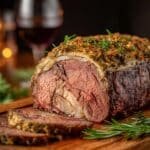
This Herb Crusted Prime Rib (Standing Rib Roast) recipe offers a succulent and flavorful roast featuring a garlic and fresh herb crust, slow roasted to perfection for a tender and juicy medium-rare finish. Enhanced with a rich pan sauce made from roasted garlic, onions, and beef stock, this classic dish is ideal for special occasions or elegant dinners.
- Prep Time: 20 minutes
- Cook Time: 3 hours
- Total Time: 3 hours 20 minutes
- Yield: Serves 8 to 10
- Category: Main Dish
- Method: Roasting
- Cuisine: American
Ingredients
Meat
- 7-8 lb bone-in prime rib (standing rib roast, 3-4 bones)
Herb Rub
- 3 tablespoons kosher salt (Diamond Crystal preferred)
- 2 teaspoons freshly ground black pepper
- 4 garlic cloves, peeled
- 4 sprigs fresh rosemary, leaves stripped and minced
- 2 tablespoons fresh thyme leaves
Butter Spread
- 1 stick (4 oz) unsalted butter, softened
- 1 tablespoon Dijon mustard
Roasting Vegetables
- 2 yellow onions, peeled and quartered
- 2 heads garlic, tops cut to expose cloves
Pan Sauce
- 2 cups beef stock or broth
Instructions
- Prepare the Herb Mixture: Finely mince the rosemary and thyme leaves, then combine them with kosher salt and freshly ground black pepper in a bowl.
- Make Garlic Paste: Mince the garlic cloves, sprinkle them with a pinch of salt, and mash into a paste. Thoroughly mix this into the herb-salt mixture to create the herb-garlic rub.
- Apply Herb Rub to Roast: Place the prime rib on a wire rack set over a rimmed baking sheet. Rub the herb-garlic mixture all over the surface of the meat, ensuring full coverage.
- Refrigerate Roast: Place the rubbed roast uncovered in the refrigerator for 12 to 24 hours to allow the flavors to penetrate and to dry out the surface for better crust formation.
- Bring Roast to Room Temperature: Remove the roast from the refrigerator about 1 hour before cooking to let it come to room temperature for even roasting.
- Prepare Butter Spread: Mix the softened unsalted butter with Dijon mustard until smooth, then spread this evenly over the entire surface of the roast.
- Preheat Oven: Set your oven to 500°F (260°C) to start the high-heat roasting phase.
- Arrange Vegetables and Roast: Place the quartered onions and garlic heads in the bottom of a large, oven-safe skillet or braiser. Position the roast on top with the fat side up and bones down.
- Initial High-Heat Roast: Roast the meat at 500°F for 20 minutes to develop a flavorful crust.
- Lower Oven Temperature and Continue Roasting: Reduce the oven temperature to 225°F (110°C) and continue roasting. Baste the roast with its pan juices every 30 minutes until the internal temperature reaches 115-120°F for medium-rare doneness.
- Rest the Roast: Remove the roast from the oven, tent loosely with foil, and let it rest for 30 minutes to allow the juices to redistribute.
- Make Pan Sauce: Remove the garlic heads from the pan and place the skillet over medium heat. Add the beef stock and simmer until the liquid is reduced by half, concentrating the flavors.
- Serve: Remove the bones from the roast, slice the meat, and serve with the roasted onions, garlic, and pan sauce for a complete and delicious prime rib experience.
Notes
- For best results, use Diamond Crystal kosher salt as it dissolves well and seasons evenly.
- Letting the roast rest uncovered in the refrigerator dries the surface for a better crust during roasting.
- Bringing the roast to room temperature before cooking ensures even cooking throughout.
- Internal temperature of 115-120°F after roasting and resting will yield medium-rare; adjust based on preference.
- Basting every 30 minutes helps keep the meat moist and enhances flavor.
- Allow the pan sauce to reduce to intensify its flavor and thicken slightly before serving.



Leave a Reply