
If you're craving something rich, full of flavor, and surprisingly easy to prepare, this Savory Mongolian Beef Noodles Recipe fits the bill perfectly. It's a comforting meal that works beautifully for a satisfying lunch or weekday dinner, blending tender beef and glossy noodles in a savory, slightly sweet sauce that hugs every bite. I love turning to this recipe when I want to impress without spending hours in the kitchen.

Jump to:
Why You'll Make This on Repeat
This Savory Mongolian Beef Noodles Recipe is the kind that grows on you the more you make it, thanks to its comforting balance and straightforward techniques. You'll find yourself coming back because it delivers every time without needing fancy ingredients or complicated steps.
- Reliable Texture: The tender beef slices paired with perfectly chewy noodles create a wonderful contrast that feels luxurious but approachable.
- Balanced, Cozy Flavor: The sauce mixes savory soy, sweet brown sugar, and a touch of acidity for harmony that's never overpowering.
- Pantry-Friendly: Most items come from your standard Asian sauce staples, making it easy to prepare anytime.
- Weeknight Simple: With quick steps like stir-frying and a short marinating time, it's ideal when you want a tasty meal without fuss.
Ingredient Highlights

To make this Savory Mongolian Beef Noodles Recipe sing, I always focus on fresh, quality beef and a mix of sauces that build depth. Selecting good noodles and bright vegetables really lifts the whole dish, so let's talk about the key players you'll want to source well.
- Flank steak or sirloin: Choose thinly sliced, tender cuts for best results-slicing against the grain helps keep the beef juicy and easy to bite.
- Soy sauce (light and dark): Use a reliable brand with balanced saltiness to keep your sauce from tipping too salty or bland.
- Brown sugar: Provides the signature sweet note; lightly packed works best to melt thoroughly into the sauce.
- Egg noodles or ramen noodles: Look for fresh or dried noodles without seasoning packets to control the flavor precisely.
- Fresh vegetables: Crisp carrots, bell peppers, and steamed broccoli bring both crunch and color to the plate.

Quick Note: Exact measurements are in the printable recipe card at the bottom.
Step-by-Step for Savory Mongolian Beef Noodles Recipe
Step 1 - Prep & Season
Start by thinly slicing your beef against the grain; this small detail makes the meat tender when cooked. In a bowl, toss the beef with cornstarch, light and dark soy sauces, oyster sauce, beef broth, sesame oil, and minced garlic. I recommend letting it marinate for at least 10 minutes-this not only tenderizes the beef but also infuses it with rich flavor. While you prep the sauce and veggies, the beef will soak up all those delicious seasonings.
Step 2 - Build Flavor
Mix your Mongolian sauce separately by whisking light soy sauce, dark soy sauce, brown sugar, beef broth, apple cider vinegar, fresh ginger, and minced garlic until the sugar dissolves. Then, blend cornstarch with water to form a slurry for thickening later. This preparation lets you move quickly when stir-frying, keeping everything hot and vibrant. Trust me, organizing these steps upfront makes the whole cooking flow smoother and the flavors pop beautifully.
Step 3 - Finish for Best Texture
Heat a tablespoon of oil in a wok or large skillet over medium-high heat until shimmering. Add the beef slices in one layer, avoiding overcrowding so the edges brown nicely. Sear for about 1-2 minutes each side-you're looking for a glossy caramelized surface while keeping the inside tender. Remove the beef, then toss your vegetables in the same pan to soak up leftover flavors. Once the veggies are just tender-crisp, stir the beef back in and pour in the prepared sauce. Add the cornstarch slurry gradually while stirring, cooking for another 2-3 minutes until the sauce thickens into a luscious glaze. Finally, add your cooked noodles and toss everything gently, coating the noodles thoroughly. Finish with green onions for a fresh pop of color and bite.
Kitchen Notes I Rely On
Over time, a few little tricks helped me nail this recipe. The balance is delicate but manageable once you know what cues to watch for. Here's what I keep in mind every time I cook this dish to get consistent results that wow.
- Doneness Cue: Look for the beef to lose its raw translucence but remain juicy and tender, about 2 minutes per side.
- Temperature Trick: High heat is your friend-keep the pan hot enough to sear but not so hot that the sauce burns.
- Make-Ahead Move: Marinate the beef up to an hour ahead in the fridge for deeper flavor without extra work.
- Skip This Pitfall: Avoid overcrowding the pan; browning is essential for flavor, so cook the beef in batches if needed.
Serving & Sides
Finishing Touches
To finish this Savory Mongolian Beef Noodles Recipe, I like scattering toasted sesame seeds and freshly sliced green onions over the top. These add a toasty crunch and a mild oniony brightness that lifts the dish beautifully. A drizzle of sesame oil right before serving amps up the aroma, making your kitchen smell irresistibly cozy.
Pairs Nicely With
This dish pairs wonderfully with light sides that add freshness and contrast, such as a crisp cucumber salad, steamed bok choy, or even some pickled vegetables. For something heartier, simple garlic sautéed greens or a bowl of miso soup create a well-rounded meal without competing with the bold flavors of the beef noodles.
Simple Plating Upgrades
When plating for guests or a special occasion, I like using wide, shallow bowls that let the noodles spread out and show off their glossy sauce. Garnishing with a few extra sesame seeds and finely julienned scallions adds polish with minimal effort. A wedge of lime on the side can brighten things up just before eating, adding a surprising zing.
Make-Ahead & Storage
Storing Leftovers
Leftover Savory Mongolian Beef Noodles store well in an airtight container in the refrigerator for 3 to 4 days. Keep in mind that noodles tend to absorb sauce and can become softer over time, so refreshing with a splash of broth or a quick reheat with a bit of water helps bring them back to life.
Freezer Tips
This recipe freezes decently, especially if you separate the noodles and beef from the sauce before freezing. Thaw overnight in the fridge, then gently reheat in a skillet to revive textures. However, noodles may become softer after freezing, so it's best enjoyed fresh or within a month if frozen.
Reheating Savory Mongolian Beef Noodles Recipe Without Drying Out
When reheating, I find the stovetop is best to preserve texture-warm gently over medium-low heat with a splash of beef broth to maintain moisture. If you use a microwave, cover the dish and add a tablespoon or two of water before heating in short bursts, stirring in between. An air fryer can crisp the edges, but be careful not to dry out the noodles by checking frequently.
Frequently Asked Questions
Absolutely! While flank steak or sirloin is ideal for tenderness and quick cooking, you can also try ribeye or skirt steak. Just make sure to slice thinly against the grain to keep the beef tender.
Egg noodles and ramen noodles without the seasoning packets work best, as they absorb the sauce beautifully and have the right chewiness. Fresh noodles are great if you can find them, but dried noodles are perfectly fine too.
{{FAQ_ANSWER_3}}
You can swap the beef with tofu or seitan for a vegetarian version and use vegetable broth instead of beef broth. Adjust the marinating time accordingly, and consider adding mushrooms for extra umami depth.
Final Thoughts
I hope this Savory Mongolian Beef Noodles Recipe becomes one of your kitchen staples. It's one of those dishes that's comforting and impressive without being complicated. Whether it's a solo lunch, feeding family, or hosting friends, it strikes a perfect balance that's hard not to love. Cooking it yourself means you control every layer of flavor and texture, making each bite exactly how you like it.
PrintPrintable Recipe
Savory Mongolian Beef Noodles Recipe
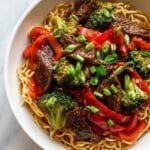
Savory Noodles with Mongolian Beef is a flavorful and hearty lunch recipe featuring tender marinated beef slices cooked with a rich, sweet-savory Mongolian sauce, stir-fried vegetables, and perfectly cooked egg noodles. This dish is a delicious fusion of bold Asian flavors and convenient stir-fry techniques, ideal for a satisfying mid-day meal.
- Prep Time: 20 mins
- Cook Time: 25 mins
- Total Time: 55 mins
- Yield: 4 servings
- Category: Lunch
- Method: Stir-Frying
- Cuisine: Chinese
Ingredients
For the Beef Marinade
- 500 g flank steak or sirloin, thinly sliced against the grain
- 2 tablespoon cornstarch
- 2 tablespoon light soy sauce
- 1 tablespoon dark soy sauce
- 1 tablespoon oyster sauce
- 2 tablespoon beef broth
- 1 tablespoon sesame oil
- 1 teaspoon garlic, minced
For the Mongolian Sauce
- ¼ cup light soy sauce
- 1 tablespoon dark soy sauce
- ¼ cup brown sugar
- ½ cup beef broth
- 1 tablespoon apple cider vinegar
- 1 tablespoon cornstarch mixed with 2 tablespoon water (slurry)
- 1 teaspoon grated fresh ginger
- 2 cloves garlic, minced
For the Noodles and Stir-Fry
- 250 g egg noodles or ramen noodles without seasoning packets
- 2 tablespoon vegetable oil or sesame oil for aroma
- 1 small onion, thinly sliced
- 1 medium carrot, julienned
- 1 small red bell pepper, thinly sliced
- 3 green onions, cut into 2-inch pieces
- 1 cup broccoli florets, lightly steamed
Optional Garnish
- 1 teaspoon toasted sesame seeds
- Extra green onions, finely sliced
Instructions
- Prepare and Marinate the Beef: In a medium bowl, combine the sliced flank steak, cornstarch, light soy sauce, dark soy sauce, oyster sauce, beef broth, sesame oil, and minced garlic. Mix thoroughly to coat the beef evenly. Allow the beef to marinate for at least 10 minutes to tenderize and absorb the flavors while you prepare other components.
- Cook the Noodles: Bring a large pot of salted water to a boil. Add the egg noodles and cook according to package instructions until al dente. Drain well and toss with a light drizzle of oil to prevent sticking. Set aside.
- Make the Mongolian Sauce: In a small bowl, whisk together light soy sauce, dark soy sauce, brown sugar, beef broth, apple cider vinegar, grated ginger, and minced garlic. In a separate small cup, mix cornstarch with water to create a slurry for thickening. Keep both mixtures ready.
- Stir-Fry the Beef: Heat 1 tablespoon of oil in a large wok or skillet over medium-high heat. Add marinated beef slices in a single layer, cooking in batches if necessary to avoid overcrowding. Sear each side for 1 to 2 minutes until browned but still tender. Remove the beef from the pan and set aside.
- Cook the Vegetables: Add the remaining tablespoon of oil to the same wok. Toss in the sliced onions, julienned carrot, and red bell pepper. Stir-fry for 2 to 3 minutes until they start to soften but retain some crispness. Add steamed broccoli florets and toss briefly to combine.
- Combine Beef, Sauce, and Noodles: Return the cooked beef to the wok with the vegetables. Pour in the prepared Mongolian sauce and stir well, letting it simmer gently. Stir in the cornstarch slurry and cook for 2 to 3 minutes until the sauce thickens and turns glossy. Add the cooked noodles and toss all ingredients thoroughly until the noodles are evenly coated. Finally, add the green onion pieces and mix briefly.
- Serve Hot and Garnish: Transfer the noodles and beef mixture to a serving dish. Sprinkle with toasted sesame seeds and additional sliced green onions for extra flavor and an appealing presentation. Serve immediately while hot for the best taste and texture.
Notes
- Slice the beef thinly against the grain for maximum tenderness.
- The cornstarch in the marinade helps tenderize the meat and creates a silky texture.
- Lightly steaming broccoli before stir-frying ensures it cooks evenly without becoming mushy.
- Cook noodles just until al dente to avoid overcooking when mixing with the sauce.
- Use sesame oil for a more aromatic flavor in the stir-fry if preferred over vegetable oil.
- The sauce thickness can be adjusted by adding more or less cornstarch slurry.
- Feel free to swap out vegetables based on availability or preference.
- Serve immediately to enjoy the best combination of textures.



Leave a Reply